
Basement Renovations
Flooded Basement in Niagara After the Storm? What to Do First, and What Insurance Usually Covers
By Ghassan Barakat, Founder & Owner · Published August 6, 2026 · Updated August 14, 2026
What Niagara homeowners should do after basement flooding, how common Ontario water endorsements work, and what to verify before the repair and rebuild begins.
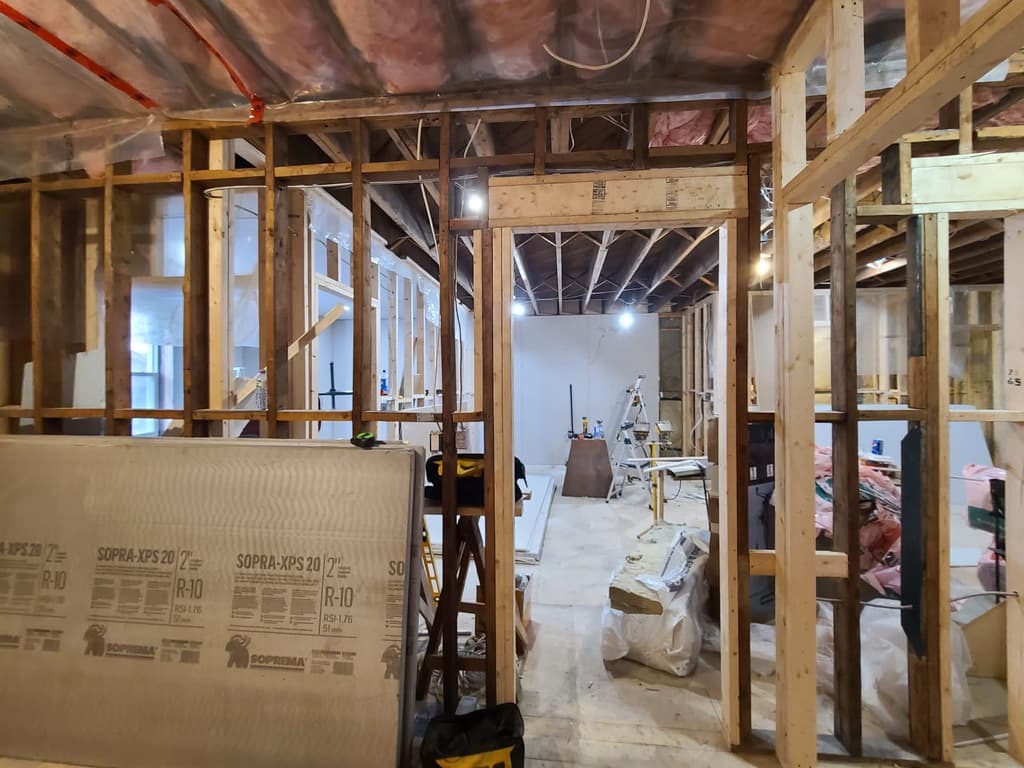
After heavy rain, a burst pipe, or a sewer backup, the first questions are the same: what is safe to do now, what should be documented, and what might insurance cover?
This guide answers both in the order they actually matter. It is written by a Welland-based renovation crew that has torn out and rebuilt a lot of water-damaged basements in this region.
Basement flooded? Call Byout Renovations at (905) 414-3662 for the tear-out and the rebuild, or request a free written quote. We are local, we answer, and we can be on site fast.
First: the 8 things to do in the first 24 hours
Work through these in order. The order matters more than the speed.
- Do not walk into standing water until the power is dealt with. If the water is anywhere near the panel, the furnace, outlets, or extension cords, stay on the stairs and call your electrical utility or a licensed electrician to kill power safely. No renovation is worth this step.
- Stop the source if you can do it safely. Burst supply line or water heater: shut the main water valve. Sewer or floor drain backup: stop running water upstairs — every toilet flush, load of laundry, and shower makes it worse.
- Call your insurance company and open a claim. Do this on day one even if you are unsure you are covered. Claims have reporting timelines, and the emergency-cleanup portion is often authorized right on that first call.
- Photograph and video everything before you move anything. Take wide shots of every wall and close shots of the water line, flooring, mechanical equipment, and damaged contents. Ask your adjuster what evidence and material samples they need you to retain.
- Get the water out and start drying. Pumps, extraction, then commercial fans and dehumidifiers. Household box fans are not enough for a full basement.
- Move contents up and out. Cardboard, upholstered furniture, mattresses, and anything porous that sat in water. Photograph each item first and write down what it was and roughly what it cost.
- Address soaked material promptly. Wet drywall, batt insulation, underpad, and some flooring can hold water in concealed assemblies. Health Canada says mould can begin growing where excess moisture is present within 48 hours and recommends professional help when sewage is involved or flooding has entered building cavities.
- Keep every receipt. Save invoices for emergency work, equipment, trades, disposal, and temporary accommodation. Ask your insurer which costs your policy covers before assuming they will be reimbursed.
Prompt action matters. Health Canada says mould can begin growing in an area with excessive moisture within 48 hours. The source must be corrected and affected materials assessed; large areas, sewage-contaminated water, and water inside wall or floor cavities warrant qualified professional help.
What Ontario home insurance usually covers, and what it does not
This is where most Niagara homeowners get caught, so it is worth being precise. In Ontario, "flood" is not one thing on your policy. It is three different things, and they are covered by three different pieces of paper.
| What happened | The usual coverage that applies | Typically included by default? |
|---|---|---|
| Burst pipe, failed supply line, leaking water heater | Sudden and accidental water escape | Usually yes, in a standard policy |
| Water backing up through a floor drain, toilet, or sewer line | Sewer backup endorsement | No — it is an add-on |
| Rain running in over the ground, through window wells, or up the driveway | Overland water endorsement | No — it is an add-on |
| Groundwater seeping steadily through a foundation crack over time | May be excluded as gradual damage or maintenance | Verify your wording |
| Water entering through a storm-damaged roof | Sudden interior water damage may be covered; wear and maintenance exclusions can apply | Verify your wording |
Two things people get wrong here, and both cost money:
"I don't have flood insurance, so I'm not covered." Do not decide that from the word “flood” alone. The Insurance Bureau of Canada distinguishes sudden indoor water damage from sewer backup and overland flooding; the latter two usually require optional coverage. Check your declarations page and ask your broker or insurer to confirm the actual policy wording.
"I'll clean it all up first, then call." Also a mistake. Clean up enough to stop further damage, absolutely, but the documentation has to happen alongside it, not after. An adjuster who arrives to a dry, empty, freshly-scrubbed basement has nothing to assess but your word.
A few more practical notes on the claim itself:
- Your deductible applies, and sewer backup endorsements sometimes carry their own, separate, higher deductible. Ask.
- Coverage limits may apply to optional endorsements. Ask about the limit, deductible, and whether contents, mitigation, and additional living expenses are treated separately before planning the rebuild.
- Ask how contractor selection works under your policy. An insurer may recommend a vendor. Before signing, confirm in writing who authorizes the scope, who pays each invoice, and how supplements or disputed items are handled.
- Ask what "like for like" means in your policy. It generally means restoring what was there, not upgrading. If you want to improve the basement while it is open, that difference is typically paid by you — and it is often the right call, since the walls are already off.
None of the above is insurance advice, and every policy differs. Your broker and your policy wording control the outcome. Read the declarations page and ask questions in writing.
Why Niagara basements flood in storms like this one
Some of this is geography, and knowing which cause you have changes what the permanent fix looks like.
- Wet-weather pressure on sewers. Niagara Region explains that heavy rain and snowmelt can exceed the capacity of older sewer pipes, and excess inflow or infiltration can contribute to basement backups.
- Water moving toward the foundation. Poor grading, short downspouts, clogged drainage, and foundation openings can direct rainfall toward the house.
- Grading that has settled. Soil settles against foundations over the decades, and eventually the ground slopes toward the house instead of away. It is one of the most common causes we see, and one of the cheapest to fix.
- Downspouts discharging right at the wall. A correctly placed extension can move roof water away from the foundation; confirm that it drains safely without affecting neighbouring properties.
- Backwater valve missing, seized, or blocked. Newer builds often have one. Many 1950s–1980s Niagara homes do not, and older valves seize if they are never checked.
- Sump pump failure or a power outage. A compatible, maintained backup system may reduce this risk, but a qualified installer should size and configure it for the property and discharge conditions.
The repair and rebuild, stage by stage
Here is what actually happens after the water is gone. This is where we come in.
Stage 1 — Tear-out and assessment
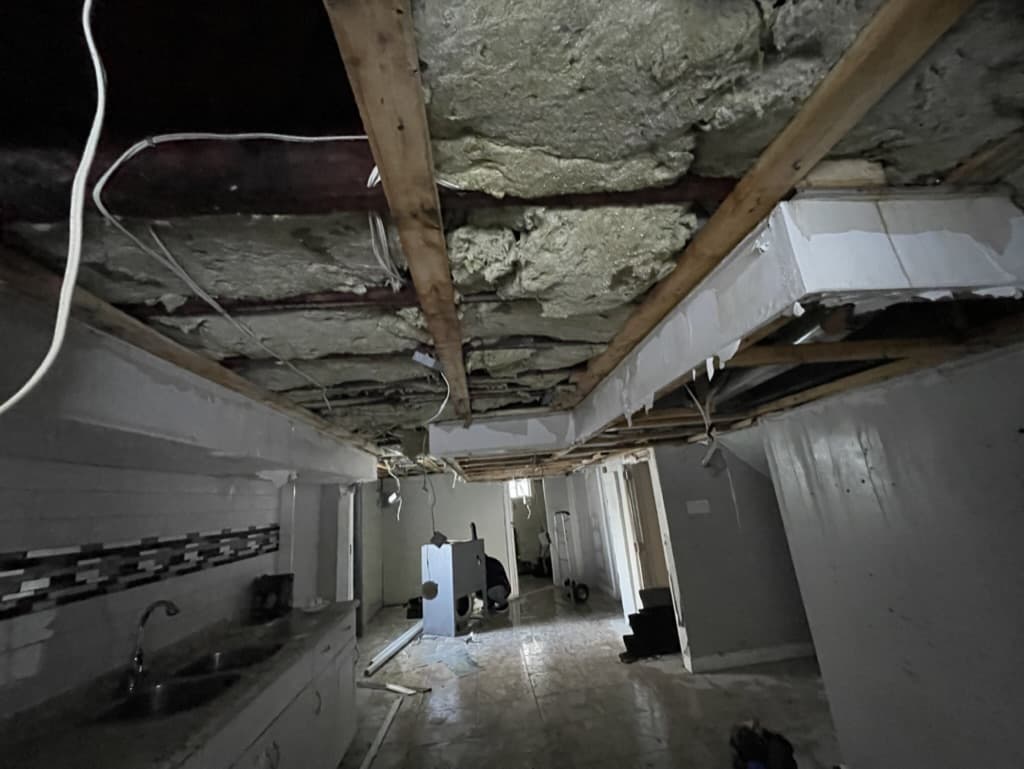
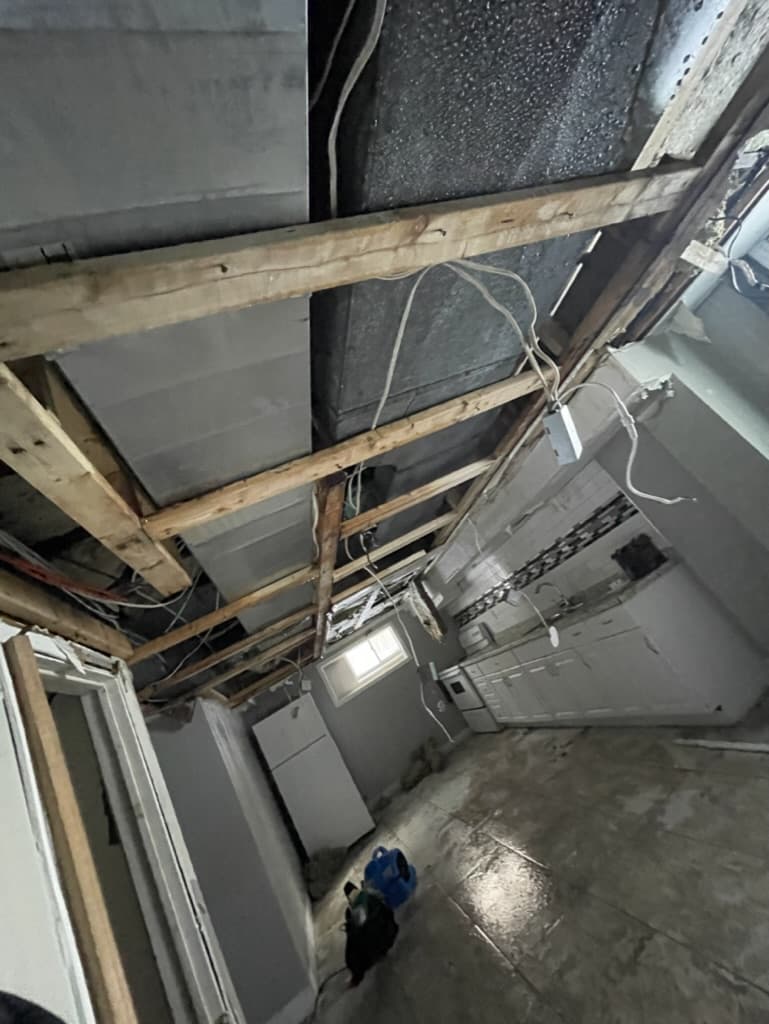
The removal scope follows the inspection, water source, contamination level, and moisture readings—not a universal cut height. Materials that cannot be safely cleaned or dried are removed so the framing, sill plate, foundation wall, and possible entry point can be assessed before anyone quotes the rebuild. Sewage-contaminated water or flooding inside wall, ceiling, or floor cavities calls for qualified remediation assessment.
Stage 2 — Drying and verification
Dehumidifiers and air movers run until the affected assembly meets the drying criteria set for the job and moisture readings are documented. The time varies with materials, temperature, humidity, airflow, and the extent of water intrusion. Rebuilding should not begin while the assembly remains damp.
Stage 3 — Fix the cause, not just the damage
Open walls can make some corrective work more practical, but the right remedy depends on the verified water source. Depending on what the assessment revealed, that can mean regrading and downspout extensions, foundation repair, a sump pump or compatible backup system, a backwater valve on the sewer lateral, or window-well drainage. Some of this is our work; other items require a plumber, electrician, foundation specialist, or excavator.
Stage 4 — Rebuild
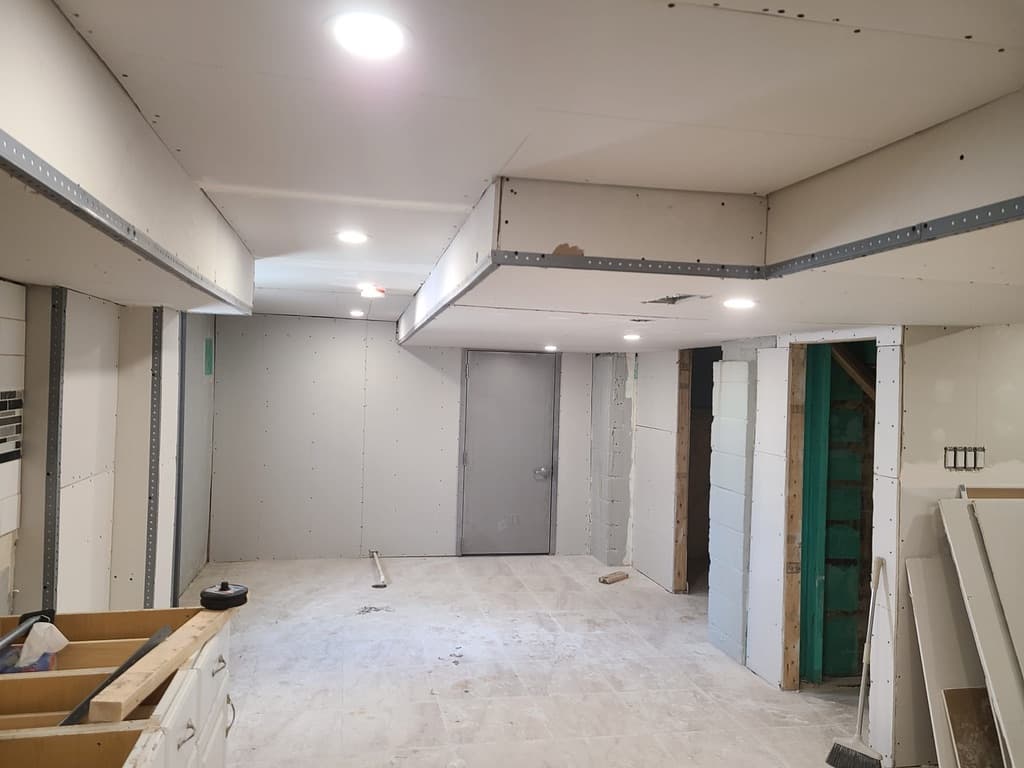
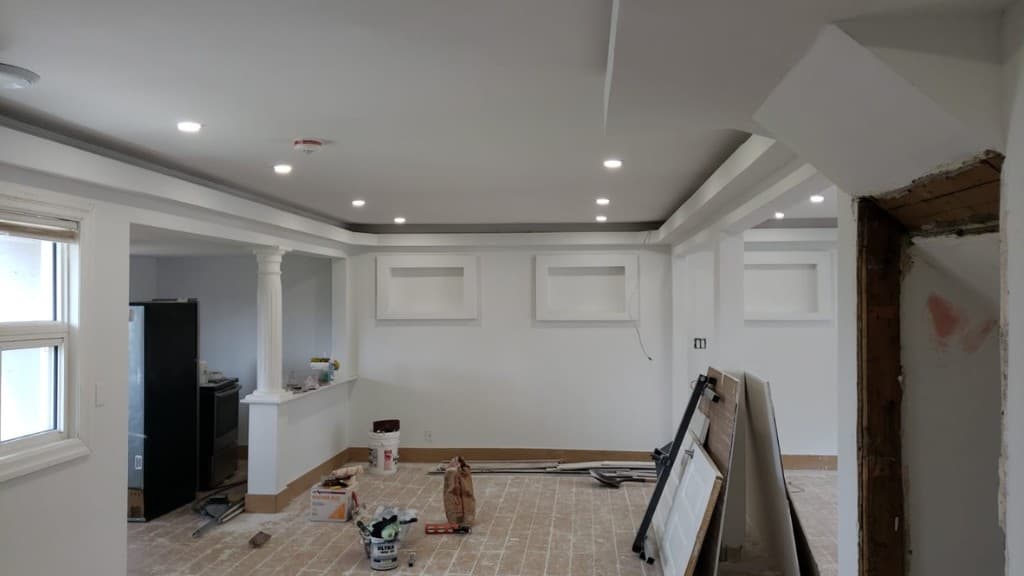
New framing where it is needed, new insulation, drywall, taping, and finishing, trim, paint, and flooring. Where the damage touched structure, our framing and structural work covers it. If the basement was finished before, we put it back — and if you want to change the layout while it is open, this is the least expensive time you will ever have to do it. See our full basement renovation services in Niagara.
A note on materials the second time around. During reconstruction, discuss assemblies and finishes suited to below-grade moisture risk, the approved design, and manufacturer instructions. No finish makes a basement flood-proof, and future damage depends on the source, depth, contamination, duration, and construction details.
What controls the timeline
| Stage | What must be confirmed before moving on |
|---|---|
| Emergency mitigation | Power and source are safe; damage is documented; contaminated materials are handled correctly |
| Drying | Moisture readings meet the job's documented drying criteria |
| Cause correction | Drainage, plumbing, foundation, sump, or sewer issue has been addressed by the appropriate trade |
| Reconstruction | Insurer/client scope is approved and material, permit, and inspection requirements are known |
Need a reconstruction assessment? Call (905) 414-3662. Promptly identifying the water category, documenting the damage, and following the appropriate mitigation or remediation path can reduce how long affected materials remain wet.
Flooded basements by city
The cause needs to be diagnosed at the property. Municipal and regional infrastructure can be one factor, but grading, laterals, sump systems, foundations, and plumbing are property-specific.
St. Catharines
Niagara Region lists St. Catharines among the municipalities with an inflow-and-infiltration reduction program. That does not identify the cause at a particular house, so the private lateral, grading, sump, and foundation still need inspection. See renovations in St. Catharines and basement finishing in St. Catharines.
Welland
We are based in Welland. Niagara Region lists a Welland sewer-water alleviation program among its inflow-and-infiltration resources; eligibility and program status should be checked with the city. See renovations in Welland and basement finishing in Welland.
Thorold
Thorold homes can experience exterior drainage, foundation, plumbing, sump, or sewer-related water. The visible entry point is not always the underlying source, so the repair scope should follow a property inspection. See renovations in Thorold and basement finishing in Thorold.
Niagara Falls
Niagara Region lists Niagara Falls among the municipalities with a weeping-tile removal assistance program. Check current eligibility with the city and have the cause at the property diagnosed before selecting a fix. See renovations in Niagara Falls and basement finishing in Niagara Falls.
Port Colborne, Fort Erie, Niagara-on-the-Lake, Grimsby, and Lincoln
We cover Port Colborne, Fort Erie, Niagara-on-the-Lake, Grimsby, and Lincoln. The local cause and available municipal programs differ, so verify both before choosing a permanent fix. The full list is on our service areas page.
If the flooded basement was a rental unit
If you have a basement apartment down there, the rebuild is a good moment to check that what goes back in is compliant — fire separation, egress, ceiling height, and ventilation. Rebuilding to the same non-compliant condition you had before is a missed opportunity and a future problem with insurance or a sale. Our legal secondary suites page covers the permit-led path, and our guide to legal basement suites in Niagara walks through the requirements.
Frequently asked questions
Does home insurance cover a flooded basement in Ontario?
It depends on which endorsement you bought. A base Ontario homeowner policy usually covers sudden internal water escape, such as a burst pipe or a failed water heater. Water that backs up through a floor drain or sewer line is normally covered only if you have a sewer backup endorsement, and water that runs in over the ground during heavy rain is normally covered only if you have overland water coverage. Many Niagara homeowners carry one or both, so check your declarations page before assuming you are not covered.
Who do I call first when my basement floods?
Safety first, then your insurer. If water is anywhere near the electrical panel, furnace, or outlets, call your utility or an electrician before you go down. Then call your insurance company to open a claim and start the clock on emergency cleanup, and call a plumber if the water is coming from a drain or sewer line. Byout Renovations can be called any time at (905) 414-3662 for the tear-out and the rebuild once the water is stopped.
How long does it take to repair a flooded basement in Niagara?
There is no reliable timeline until the source, contamination level, affected materials, and moisture readings are known. Emergency work and drying come first. Reconstruction begins only after the assembly is dry, the cause has been addressed, and the repair scope is approved. Ask for a written schedule that separates mitigation, drying verification, cause correction, and reconstruction.
Should I dry out the drywall or replace it?
It depends on how wet the assembly is, how long it remained wet, and whether the water was contaminated. Health Canada says mould can begin growing in excessive moisture within 48 hours and recommends professional assessment when sewage is involved or flooding has entered wall, ceiling, or floor cavities. Do not rely on a cosmetic cut line alone; use inspection and moisture readings to define the removal scope.
Will my insurance claim be denied if I tear out the drywall before the adjuster sees it?
Your policy generally requires you to prevent further damage, so starting emergency cleanup is expected. The risk is losing your proof. Photograph and video everything before and during tear-out, keep a written list of damaged contents, keep every receipt, and bag or set aside samples of removed materials until the adjuster has confirmed what they need.
Do you do flooded basement repairs in St. Catharines, Welland, and Thorold?
Yes. Byout Renovations is based in Welland and works across the full Niagara Region, including St. Catharines, Welland, Thorold, Niagara Falls, Port Colborne, Fort Erie, Niagara-on-the-Lake, Grimsby, and Lincoln. Call (905) 414-3662 for a free written quote on the tear-out and rebuild.
Talk to a local crew today
We are a Welland-based renovation company, not a call centre, and we have rebuilt basements exactly like the ones in the photos on this page — stripped to the studs after water damage, then finished properly.
- Free written quote, itemized so you and your adjuster can both read it
- Documentation for your claim, including photos and a written scope
- Tear-out and rebuild under one contractor, so nobody is pointing at anyone else
- All nine Niagara municipalities served
Call (905) 414-3662 now, or request your free quote online.
Official sources and safety checks
- Electrical Safety Authority: flood safety — when not to enter a basement and when a licensed electrical contractor is needed.
- Health Canada: addressing moisture and mould indoors — moisture control, the 48-hour mould warning, cleanup precautions, and when to seek professional help.
- Insurance Bureau of Canada: water damage and flood protection — general distinctions between sudden indoor water damage, sewer backup, and overland flood coverage.
- Niagara Region: flood emergency guidance — local electrical and re-entry precautions.
- Niagara Region: combined sewer overflows and inflow and infiltration — how wet weather can affect regional sewer capacity and links to municipal assistance programs.
This article is general information for Niagara Region homeowners, not legal, insurance, engineering, or code advice. Coverage depends entirely on your own policy wording and endorsements — confirm with your broker or insurer. Structural, electrical, plumbing, and mould concerns should be assessed by the appropriate qualified professional.

About the author
Ghassan Barakat
Founder & Owner, Byout Renovations
Ghassan Barakat is the founder and owner of Byout Renovations. He leads project scoping and construction coordination from the written quote through the final walkthrough.