
Post-Permit Construction Project Management in Niagara
You have the drawings and the permit. We take the project from there: trade contracts, schedule, inspection sequencing, budget control, and the constructor role on site, through to closeout. Based in Welland, we serve St. Catharines, Niagara Falls and all 12 Niagara municipalities.
Before you start
Post-Permit Construction Project Management in Niagara: what to expect
Byout provides post-permit construction project management in Niagara for owners with a defined project and approved plans. The service coordinates trade schedules, procurement, site activity, inspections and closeout within an agreed management scope.
- What affects the cost?
- Project duration, trade complexity, procurement responsibilities, site attendance and the management duties included in the agreement.
- What helps us quote?
- Approved drawings, permit conditions, current estimates, trade commitments, target schedule and the tasks you want managed.
- What about permits and timing?
- We handle permit coordination with OAN Architect Inc. in Welland, whose architect brings 25+ years of experience in the Niagara Region. Requirements and timing depend on your property and proposed work. Find your municipal planning resources.
What the management fee covers
- Pricing of your approved permit drawings, with assumptions, allowances, and exclusions written down
- Tendering, bid comparison on equivalent scope, and verification of licensing, WSIB clearance, and insurance before anyone starts
- One contract with you, with the trade contracts held by us rather than by you individually
- The constructor role on site, the supervision that comes with it, and the insurance behind it
- Schedule management, inspection booking, documented change control, and a completed deficiency list at closeout
Fee structure depends on the size and complexity of the project and on how much of it is already under way. We set it out in writing before you commit, and we will tell you if the project is too small for this structure to be worth it to you.
Niagara planning library
Read before you finalize the scope
What We Do for Post-Permit Construction Project Management in the Niagara Region
What Happens After the Permit Is Issued
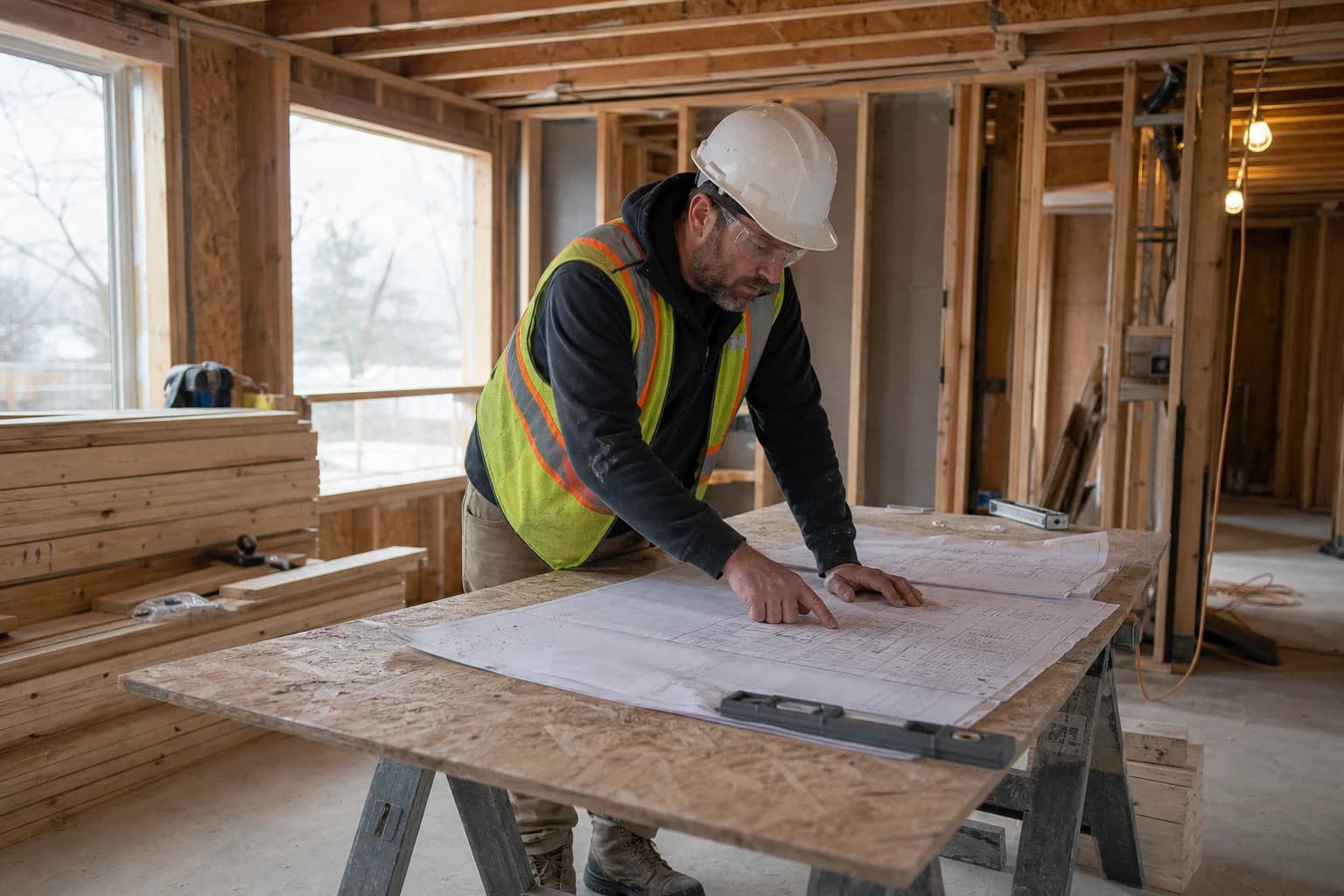
A permit is approval to build. It is not a schedule, a budget, a set of trade contracts, or a plan for who shows up in what order. Plenty of homeowners and small commercial owners reach this point with good drawings, a real permit, and no idea what the next ninety days are supposed to look like. This service starts exactly there. We price the approved drawings, put the trades under contract, build the schedule around the inspection sequence, and run the site until the job is closed out and the file is complete.
We Take the Constructor Role
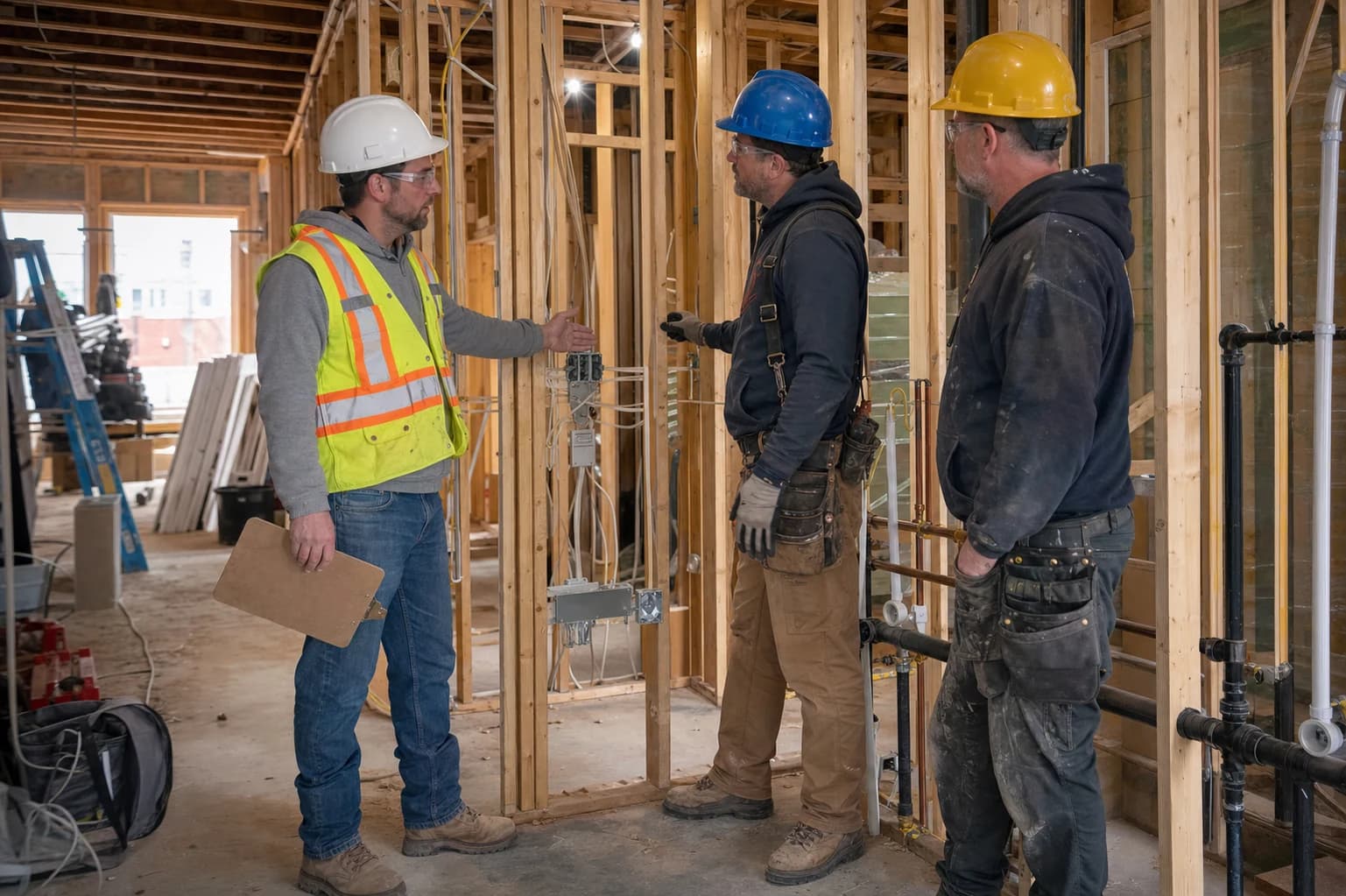
Under Ontario's Occupational Health and Safety Act, the constructor is the person who undertakes a project for an owner, and an owner who hires and directs multiple trades themselves can become the constructor without ever intending to. The constructor is responsible for site health and safety and for ensuring every employer and worker on the project meets their obligations. When we run the project, we hold the trade contracts and take the constructor role, so that responsibility sits with a contractor who carries insurance and WSIB coverage for it. This is usually the single largest reason an owner stops self-managing.
Trade Procurement & Contracts
We tender the approved drawings to trades we have worked with, compare the bids on equivalent scope rather than on headline price, and confirm licensing, WSIB clearance, and insurance before anyone starts. Bids that look cheap usually differ in what they exclude, and that is easier to catch at tender than at rough-in. You see what each trade is contracted to do, what is carried as an allowance, and what is deliberately excluded, so the number you approve is the number the work was actually bought at.
Schedule & Inspection Sequencing
Required inspections are not evenly spaced, and missing one is expensive because it means opening finished work back up. We build the schedule around them: footings and foundation, framing, plumbing and electrical rough-in, insulation and vapour barrier, then final. Trades are booked against those checkpoints rather than against optimism, and the calendar is adjusted in writing when weather, materials, an approval, or a discovered condition moves something. The municipality's inspector confirms and signs off each stage.
Budget and Change Control
Change is normal on a construction project. Unmanaged change is what turns a budget into an argument. Every change, whether you requested it or the building revealed it, gets documented with its cost and its schedule effect and is approved before the related work goes ahead. We track committed costs against the original contract as the project runs, so you are looking at the current position rather than reconciling invoices at the end and finding out how it went.
Deficiencies, Closeout & Handover
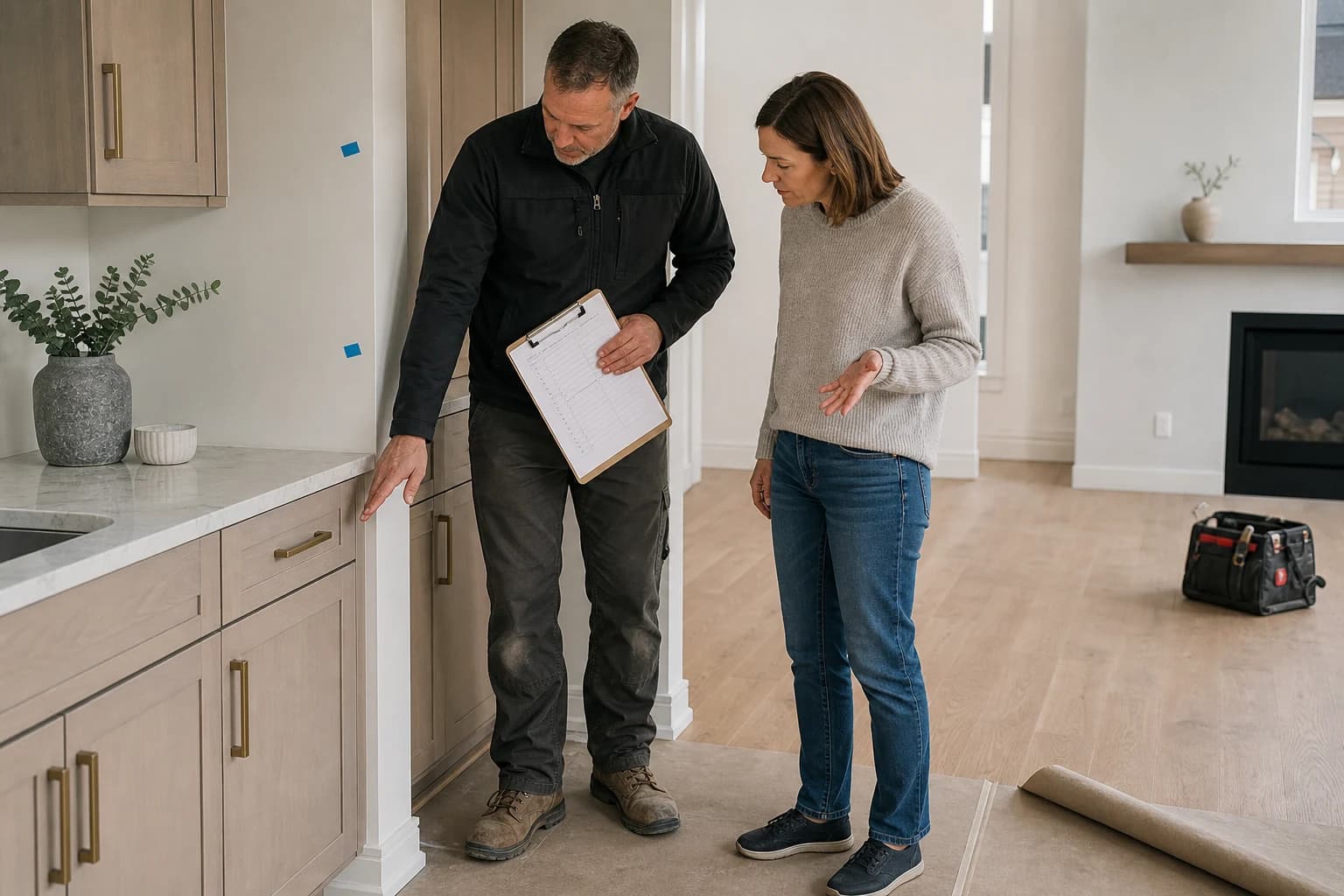
Closeout is a defined stage, not a slow fade. We walk the project with you and build a written deficiency list, assign each item to the responsible trade, and complete the list rather than negotiating around it. Handover includes the final inspection sign-offs, warranty documentation from the trades and manufacturers, product and finish information for what was installed, and any operating instructions for equipment. The file should still make sense to you two years later.
Why Choose Byout for Post-Permit Construction Project Management in St. Catharines, Niagara Falls & Welland
Your written quote sets out the planned scope, assumptions, and working schedule. When permits, drawings, or licensed trades are required, we help coordinate the right steps. Requested changes or newly discovered conditions are documented for approval before related extra work proceeds.
Areas We Serve for Post-Permit Construction Project Management in Niagara
We provide post-permit construction project management across the Niagara Region. Click your city to learn more about our work in your area.
The part nobody explains at permit issue
Who is legally responsible for your construction site
When a homeowner hires trades directly and coordinates them, they are usually not aware that Ontario law may have just made them the constructor of a construction project. It is the most consequential thing about self-managing a build, and it almost never comes up until something goes wrong.
What the constructor role means
Ontario's Occupational Health and Safety Act defines a constructor as a person who undertakes a project for an owner, and that definition includes an owner who undertakes all or part of a project themselves or through more than one employer. In practice, an owner who contracts several trades directly and coordinates the work between them can be found to have undertaken the project.
The Ministry's guideline is built around the principle that one person should have overall authority for health and safety on a project. The constructor is responsible for ensuring the measures and procedures required by the Act and its regulations are carried out, and for ensuring every employer and every worker on the project complies with their obligations. Duties include appointing supervisors, establishing emergency procedures, and reporting critical injuries and fatalities to the Ministry.
Hiring an architect, engineer, or other professional purely to oversee quality does not by itself make an owner the constructor. Directing the trades does. This is the distinction that catches people, because coordinating trades feels like project management, not like assuming statutory liability.
When Byout manages the project, we hold the trade contracts and take the constructor role, with the insurance and WSIB coverage that goes with it. You remain the owner, with the owner's duties, and you keep decision-making authority over scope, selections, and budget. What moves is responsibility for the site.
Self-managing compared with a managed project
Both are legitimate ways to build. They are not equivalent in what they ask of you, and the difference is worth seeing laid out before you choose.
| You manage the trades | Byout manages the project | |
|---|---|---|
| Constructor under the OHSA | Likely you, as owner | Byout |
| Site health and safety | Your responsibility | Our responsibility |
| Trade contracts | Held by you, individually | Held by us, under one contract with you |
| WSIB and insurance verification | You verify each trade | We verify before anyone starts |
| Scheduling and sequencing | You coordinate around inspections | We build and run the schedule |
| A trade does not show up | You chase it | We chase it, and carry the schedule risk |
| Scope gaps between trades | Usually found on site | Resolved at tender |
| Single point of accountability | None | One contract, one contact |
This describes how we structure our own engagements. It is general information about how projects are organized, not legal advice about your situation.
How the engagement runs
You arrive with approved drawings and an issued permit. Here is what the following weeks look like.
Review the approved set
We read the permit drawings and conditions, walk the site, and identify anything in the approved set that will be awkward, expensive, or ambiguous to build. It is far better to raise this before tendering than at rough-in.
Tender and award
The drawings go to trades we have worked with. Bids are compared on equivalent scope, licensing and WSIB clearance are confirmed, and the trades are put under contract to us.
Contract, schedule and budget baseline
You approve one contract with a scope, an allowance schedule, an exclusion list, and a working construction schedule built around the required inspections. That baseline is what everything afterwards is measured against.
Construction and site control
Trades are sequenced, materials scheduled, the site kept to the safety requirements, and progress reported to you on an agreed rhythm rather than on request.
Inspections
Each required inspection is booked and passed before covered work proceeds. Where an inspector requires a change, it is documented, priced if it affects cost, and resolved before the schedule moves on.
Change control
Requested changes and discovered conditions are documented with cost and schedule impact and approved in writing before the related work proceeds. No verbal extras.
Closeout and handover
Joint walkthrough, written deficiency list, completion of the list, final sign-offs, and a handover package with warranties, product information, and operating instructions.
When this service fits
It is not the right structure for every project, and it is worth being direct about that.
You have drawings and a permit already
You engaged your own designer or architect and went through the approval process yourself. You do not need design services. You need the build run.
You are out of your depth on sequencing
The drawings are approved and you have realised that knowing what a finished house looks like is not the same as knowing what has to happen in week three.
You started self-managing and it is not working
Trades are not showing up in the right order, scope is falling between them, and the schedule has stopped meaning anything. We can pick a project up mid-construction, though the earlier that happens the more we can do about the budget.
You do not want the constructor role
You understand what coordinating trades directly may make you responsible for, and you would rather that responsibility sat with an insured contractor.
You are an out-of-town owner
You own the Niagara property but do not live near it, and a project that depends on someone being on site regularly is not workable from a distance.
Official sources
Requirements change, and the authority that publishes a rule is the one to rely on. These are the starting points for the regulatory statements on this page. Byout Renovations is a contractor, not a regulator, and this page is general information rather than legal advice.
- Constructor guidelineOntario Ministry of Labour, Immigration, Training and Skills Development
- Occupational Health and Safety ActGovernment of Ontario
- Construction projects regulation (O. Reg. 213/91)Government of Ontario
- Clearance certificates for contractorsWSIB Ontario
Common questions
- I already have permits and drawings. Can you just build it?
- Yes, that is exactly what this service is for. We price the approved drawings, tender and contract the trades, build the schedule around the required inspections, run the site, and close the project out. You do not need to have used us for design, and we do not require you to redo any of the approval work you have already paid for.
- What is a constructor, and why does it matter to me?
- Under Ontario's Occupational Health and Safety Act, the constructor is the person who undertakes a project for an owner, which includes an owner who undertakes the project themselves or through more than one employer. The constructor is responsible for health and safety on the site and for ensuring every employer and worker meets their obligations. A homeowner who hires and directs several trades directly can become the constructor without realising it.
- If you manage the project, who is the constructor?
- We are. We hold the trade contracts and take the constructor role, with the insurance and WSIB coverage that goes with it. You remain the owner and keep decision-making authority over scope, selections, and budget. What moves is responsibility for the site.
- How is this different from hiring a general contractor?
- In practice it is close to the same structure, and we take the same responsibility. The difference is the starting point: this service assumes you already have approved drawings and an issued permit, so we are not selling you design work you have already bought. If your project also needs design, our other service pages cover that path.
- Can you take over a project that has already started?
- Often, yes, and it is a common reason people call. We would review what has been built, what has been paid, what is under contract, and what has been inspected before agreeing to take it on. The earlier in the build that happens, the more we can do about the budget and the schedule.
- How are changes and extra costs handled?
- Every change, whether you requested it or the building revealed it, is documented with its cost and schedule effect and approved in writing before the related work goes ahead. We track committed costs against the original contract as the project runs, so you see the current position rather than reconciling it at the end.
- Do you offer owner's representative or advisory-only work?
- Our standard structure is to hold the contracts and take the constructor role, because that is where most of the value is for the client. If you specifically want oversight while keeping the trade contracts yourself, tell us at the first conversation. That arrangement leaves the constructor responsibility with you, and we would want you to understand that before choosing it.